Why MAIA uses multiple AI models from different providers
Last updated About 1 year ago
This explanation addresses two fundamental questions about MAIA's approach:
Why use multiple AI models at all? (vs. single-model platforms like ChatGPT)
Why automatic model selection? (vs. letting users choose manually)
Both decisions stem from the same principle: maximizing productivity for teams working with complex technical knowledge.
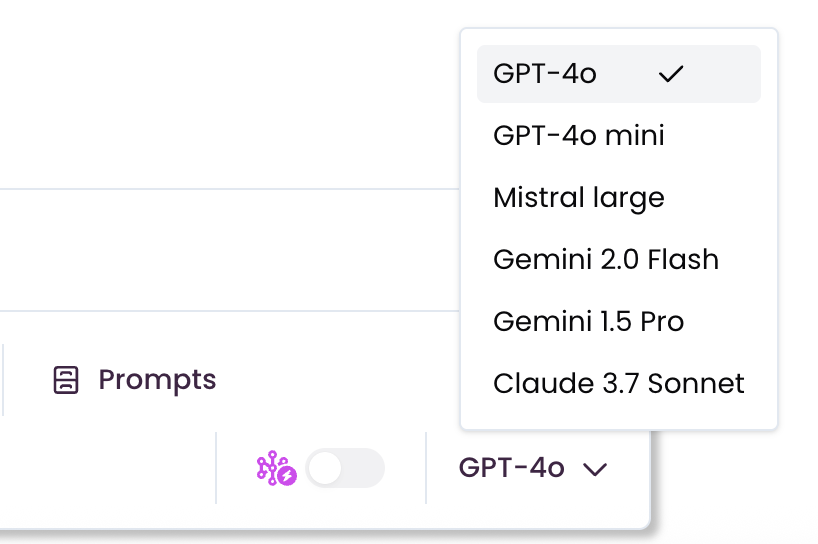
Why multiple models matter
Most AI platforms lock you into a single vendor's capabilities — when you choose ChatGPT, you get only OpenAI's models; when you choose Claude, you're limited to Anthropic's approach. MAIA takes a fundamentally different path: we treat AI models as specialized tools, each optimized for different types of work.
The performance reality
Recent benchmark data reveals significant performance gaps between models across different task types:
Coding Tasks: Claude 3.5 Sonnet emerged as the winner with 93.7%, followed by GPT-4o at 90.2% and Gemini 1.5 Pro weighing in at 71.9%. For generating code, you might go straight to Claude.
Multimodal Analysis: GPT-4o consistently outperforms the other models across most evaluation sets, showcasing its superior capabilities in understanding and generating content across multiple modalities. MMMU (%)(val): GPT-4o leads with 69.1%, followed by GPT-4T at 63.1%, and Gemini 1.5 Pro and Claude Opus are tied at 58.5%.
This isn't just academic - it translates to real differences in your daily work. When you're analyzing technical specifications that span multiple documents, you want the AI model that excels at comprehensive analysis. When you need precisely worded technical documentation, you want the model with superior writing capabilities.
The single-model limitation
Choosing just one means accepting that vendor's weaknesses along with their strengths. More importantly, it means your AI capabilities are forever tied to that vendor's release schedule and strategic decisions.
Why automatic selection maximizes team productivity
Having multiple models creates a new question: which one should you use for each task? Some platforms solve this by letting users choose manually. We believe this creates more problems than it solves.
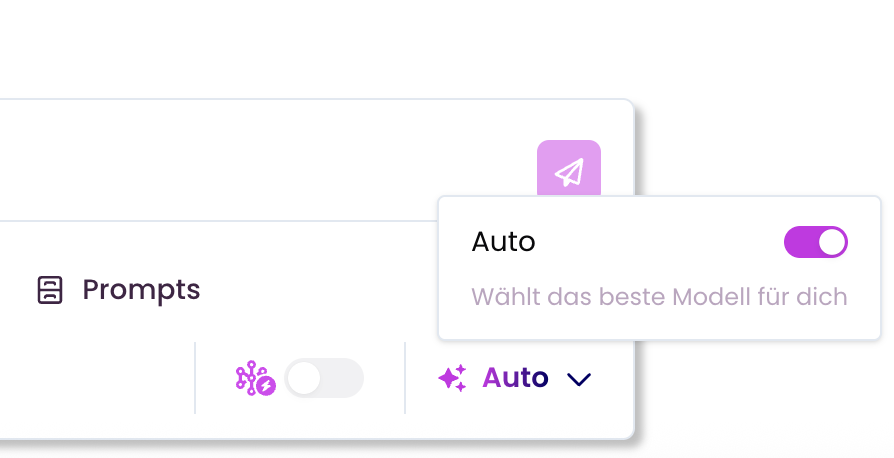
The productivity problem with manual choice
If your product manager needs to understand the strengths of Claude vs. Gemini vs. GPT-4 before asking about pump specifications, we've just added a new job requirement that has nothing to do with pumps. Your team's expertise is in manufacturing, medical devices, or engineering — not in AI model capabilities.
Real-world user feedback consistently shows this confusion: "Claude performs best when it comes to complex tasks and writing" while users note that "larger document bases, try Gemini." This knowledge shouldn't be required to get answers about your company's products.
Our solution: Intelligent routing behind the scenes
MAIA handles model selection automatically based on query analysis. Users focus on their domain expertise while MAIA provides AI expertise behind the scenes.
Benefits for team leads
This approach provides three strategic advantages for teams implementing MAIA:
Future-proofing: Your AI investment isn't tied to any single vendor's roadmap. When new, better models emerge, MAIA incorporates them automatically. Your team benefits from AI advances without migration projects or vendor negotiations.
Risk mitigation: Single-vendor dependence creates business risk. If that vendor changes pricing, reduces API access, or shifts strategic focus, your entire AI capability is at risk. MAIA's diversified approach provides vendor independence.
Consistent quality: Different team members asking similar questions get consistently high-quality answers because MAIA routes each query to the most capable model for that specific task type.
Benefits for individual users
For the people actually using MAIA daily, the multiple-model approach delivers one crucial benefit: better answers without additional complexity.
Users never need to think "Which AI should I use for this question?" or learn the strengths and weaknesses of different models. MAIA handles that complexity automatically. Whether you're analyzing customer specifications, researching technical standards, or drafting compliance documentation, you simply ask your question and receive the best possible answer.
This is particularly valuable for non-technical teams in German industrial companies, who want AI to enhance their work without requiring them to become AI experts themselves.
The competitive landscape
This approach represents a fundamental philosophical difference from single-model platforms. While ChatGPT, Claude, and other single-vendor solutions optimize for their specific model's capabilities, MAIA optimizes for your specific problems.
We're model-agnostic in the same way that good manufacturing companies are supplier-agnostic — we choose based on results. This means MAIA users get the benefits of the entire AI ecosystem, not just one corner of it.
The result is an AI platform that grows more capable over time without requiring users to learn new interfaces, migrate data, or change workflows. Your questions get better answers, and your team stays focused on what they do best.